An affiliate of the Institute of Human Virology, University of Maryland School of Medicine

Our history

From 159 patients in March 2004 to more than 817,500 people living with HIV reached, across more than 24 states.

The Institute of Human Virology, Nigeria (IHVN) was established in 2004 as an affiliate of the Institute of Human Virology, University of Maryland School of Medicine, Baltimore, USA. Its founding members were Dr William Albert Blattner, Dr Alash’le Abimiku, Dr John Farley, Dr Patrick Sunday Dakum, Dr John Vertefeuille, Dr Abdulsalami Nasidi and Dr Charles Olalekan Mensah.

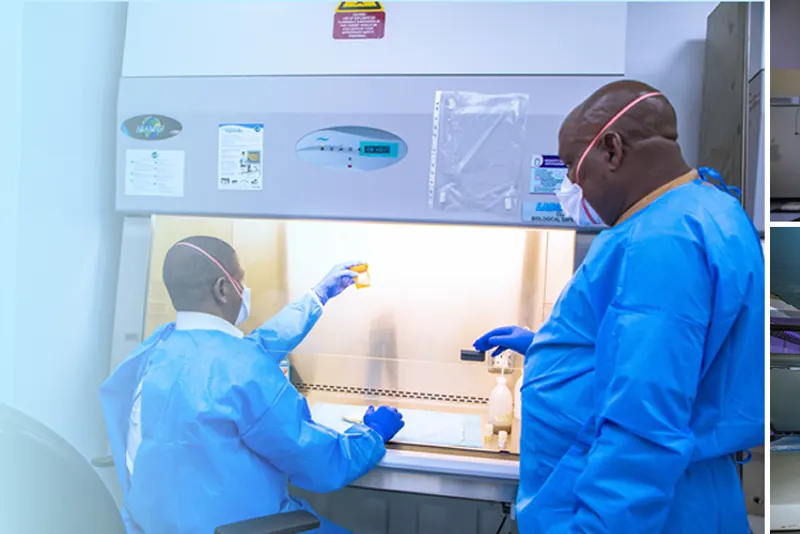
The challenge was to roll out and scale up HIV care and treatment in a resource-poor setting, to train health care providers to tackle HIV/AIDS and other viral infections, and to conduct research. Managing HIV was about more than dispensing medicines: it needed trained health workers, quality laboratory services, and adherence support that keeps people on treatment and prevents drug resistance.

Our journey

  1. 1995

    Laying the groundwork

    Working at the US National Institutes of Health, Dr William Blattner and Dr Alash’le Abimiku conducted early studies to track the emerging HIV epidemic in Nigeria. In 1995 Dr Blattner, with Dr Robert C. Gallo and Dr Robert Redfield, co-founded the Institute of Human Virology at the University of Maryland School of Medicine. Drs Blattner and Abimiku then won funding from the US Military, the Bill & Melinda Gates Foundation and the CDC AIDS Program, including a University Technical Assistance Program (UTAP) award, to establish IHVN.
  2. 2004

    IHVN is founded

    In March 2004 the University of Maryland, Baltimore facilitated IHVN’s re-incorporation as an indigenous, non-governmental organisation with a new, largely Nigerian Board of Directors. Dr Patrick Sunday Dakum (Chief Executive Officer), Dr Charles Olalekan Mensah (Chief Operating Officer) and four others formed the founding staff, working from the Chelsea Hotel in Abuja’s Central Business District.

  3. 2004

    The first patients start treatment

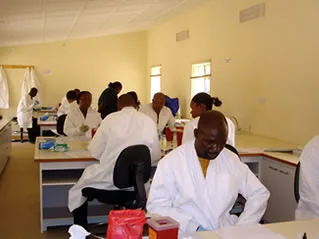
    159 patients began HIV treatment in March 2004, against an initial goal of 10,650. IHVN built Nigeria’s capacity with six tertiary hospitals: Gwagwalada Specialist Hospital (now University of Abuja Teaching Hospital), Aminu Kano Teaching Hospital, University of Benin Teaching Hospital, Nnamdi Azikiwe Teaching Hospital in Nnewi, and University of Calabar Teaching Hospital. Health workers were trained and laboratories equipped for haematology, blood chemistry and CD4 counts.

  4. 2005

    Scaling up

    A Field Operations Unit was set up to manage programme expansion and scale-up, and laboratory equipment maintenance began with technical support from the University of Maryland. As services grew, IHVN moved to Maina Court, Plot 252 Herbert Macaulay Way, in Abuja’s Central District, with an annex at the neighbouring Millennium Plaza.

  5. 2007

    Training and laboratory quality

    IHVN commissioned a Regional Training Centre at the University of Benin Teaching Hospital, and introduced Nigeria’s first External Quality Assurance programme for laboratories, the Laboratory Assessment Program Nigeria (LAPN).

  6. 2013

    Stronger laboratory systems

    With CHAI Nigeria, IHVN piloted a Laboratory Information Management System to get results to patients faster, and registered 30 supported laboratories for national certification and accreditation.

  7. 2015

    A centre of excellence for research

    IHVN established the International Research Center of Excellence (IRCE) to lead collaborative research on diseases that matter to local communities, non-communicable diseases and emerging infections. The same year, CDC handed over the National External Quality Assessment Laboratory (NEQAL) to IHVN.

  8. 2019

    Taking TB care into the private sector

    The Country Coordinating Mechanism and the Global Fund selected IHVN as the first Principal Recipient for scaling up tuberculosis Public-Private Mix (PPM) services in Nigeria.

  9. 2023

    The IHVN Campus opens

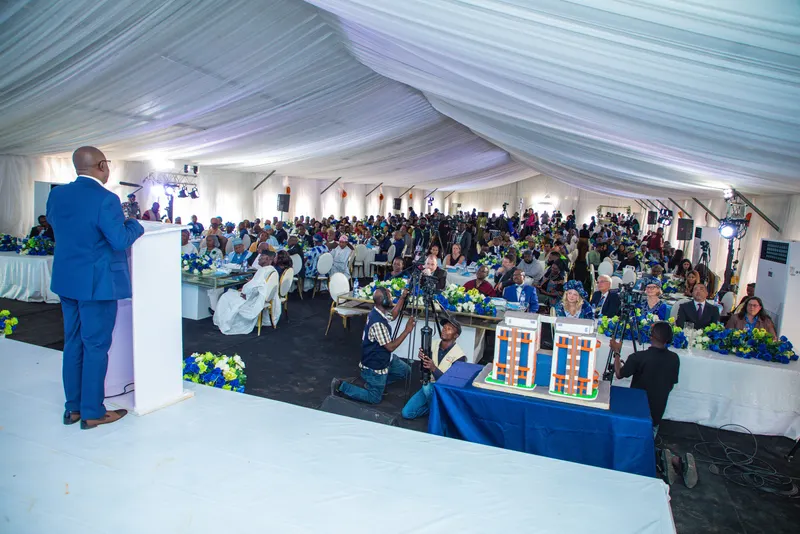
    In June 2023 IHVN commissioned its campus in Abuja, a seven-storey twin tower that brings its services, laboratories and research together as a shared resource for local and international researchers, replacing years of leased premises.

  10. Today

    More than 817,500 people reached

    Over 21 years IHVN has provided HIV care and treatment to more than 817,500 people, working in more than 24 states. It has expanded into tuberculosis, malaria and non-communicable diseases, with the Centers for Disease Control and Prevention and the Global Fund as key technical and funding partners.

Search IHVN