- Offering services (such as counselling, health education sessions) that are user friendly
- Assisting navigation as client moves from one point to another in the clinic, with proper referrals and linkage to needed services
- Developing and deploying of services data collation tools
- Working with appropriate teams to create support groups for people living with HIV
- Identifying and training People Living with HIV to serve as peer supporters
- Creating awareness about services beneficial to clients through advocacy to stakeholders, community leaders
- Developing training curricula for different cadre of care providers
- Tracking before and after clinic appointment
Care and Support Activities
Our work ensures that when clients go to health facilities we support, they are:
- Counselled and educated on HIV, positive living, prevention of transmission/re-infection
- Assessed on their current disease status (WHO staging, tuberculosis screening, Advanced HIV Disease, Viral load, functional status, nutritional status)
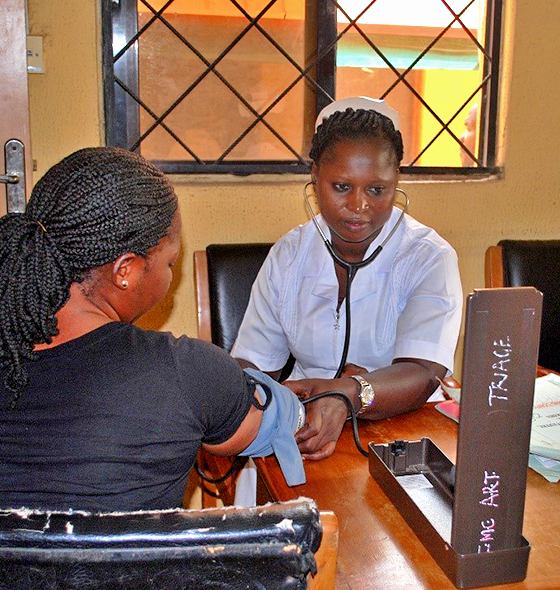
- Checked to monitor, spot problems early and refer appropriately
- Checked and triaged those requiring emergency or urgent attention
- Referred appropriately to services they may need within and outside the health facility (support groups, Differentiated Service Delivery models, Enhanced Adherence Counselling)
Retention
Retention to treatment requires that the client is connected to care, attending follow-up visits, and maintaining adherence to medication so that viral suppression and overall health can be achieved
- Assessed and monitored for their wellbeing at every clinic visit
- Client centred care—addressing not only medical needs but also social, psychological, and economic factors that influence staying in care
- Decentralized and integrated services, bringing care closer to clients
- Task-shared among providers improve accessibility
- Family and community engagement: involving caregivers, peers, and support groups to feel less isolated and more motivated to stay in care
- Respect and dignity in care delivery: Ensuring that services are non-discriminatory and tailored to client needs fosters trust and long-term engagement
Tracking
Tracking of people living with HIV (PLHIV) entails systematically monitoring whether individuals diagnosed with HIV are linked to care, remain engaged in treatment, and are not lost to follow-up
- Pre-clinic reminders are sent to clients expected for clinic appointment
- Identify clients who missed appointment and provide prompt tracking to return them back to care
- Verify client status and assign appropriately (transferred to another facility, reasons for absence, died or discontinued care)
- Home tracking by trained facility and community team
- Provided reengagement support: offer welcome back to care package of service that includes counselling to address barrier
Adherence Counselling Services
The success of antiretroviral therapy lies in clients’ ability to adhere to their drugs and clinic appointment. We work with health facilities to identify adherence counsellors, volunteers and peer educators to counsel clients. Job-aids are used to prepare clients to start treatment and adhere to their HIV medication.
- Provision of ongoing adherence counselling for stable clients
- Targeted virtual adherence support for newly diagnosed and unstable clients
In depth and intensive counselling is given to clients with unsuppressed viral load. Enhanced adherence counselling (EAC) is carried out and repeat viral load tests are done.
Nutrition Services
We train health care providers to conduct nutrition assessment for all clients. Clients are also provided with nutritional education.
Support Group Activities
We support the creation and coordination of PLHIV support groups and train peer educators on Interpersonal Communication (IPC) counselling. The aim is to run community support groups, a gold standard, to break barriers to stigma and discrimination.
Our activities include building the capacity of support group members to achieve self-sustainability. Others include, linking people living with HIV within the community for Community Case Management Program (CCMP) services, Income Generating Activities, and to other PLHIV groups.