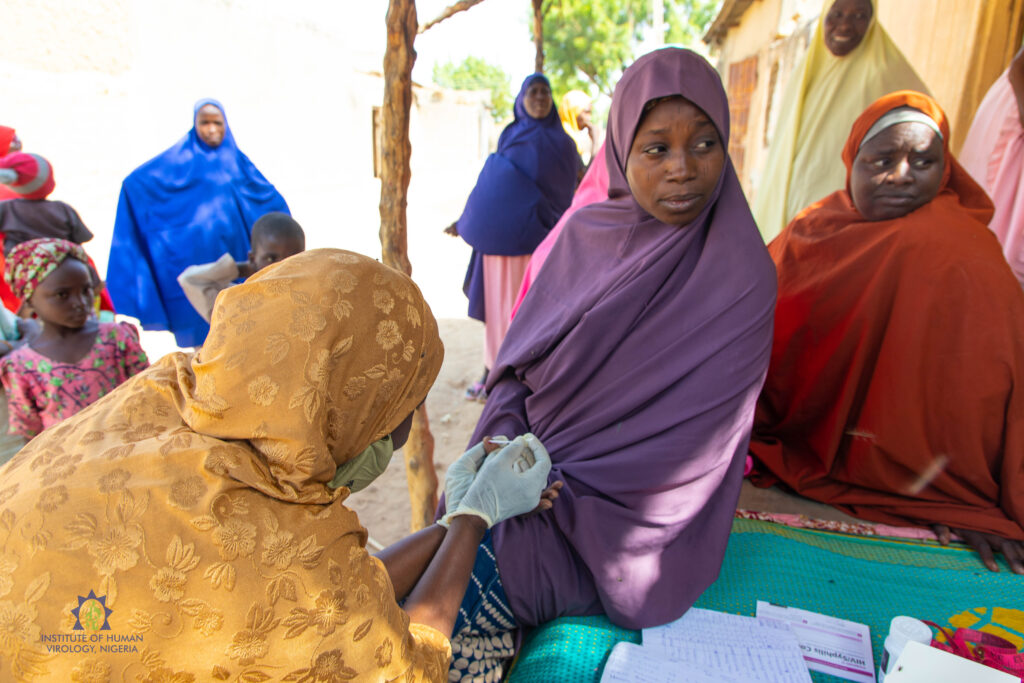

“In the past three years, I have lost two babies, a boy at seven months and a girl at five months. I did not know my HIV status neither did I know theirs until some midwives came to my community in Modoji, Katsina for an outreach in August 2025. They spoke to pregnant women about antenatal care, counselled us and carried out HIV tests.
I tested positive to HIV. I was seven months pregnant at the time. I was sad and did not know anything about preventing my baby from having HIV until they guided me on what to do,” said Khadijat Ishaq, a 23-year-old woman who benefitted from the “roving midwives” program implemented by the Institute of Human Virology Nigeria (IHVN) in Katsina State.
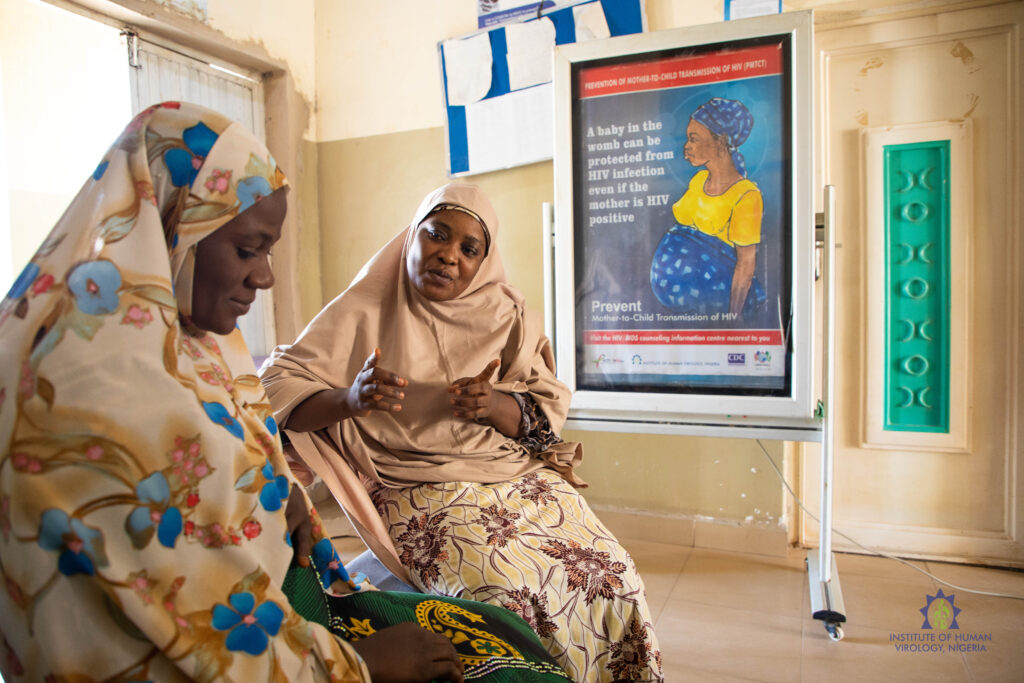
IHVN started the roving midwives’ program in Katsina state in 2022 to increase access to HIV services especially prevention of mother-to-child transmission (PMTCT) in communities. Trained Community Health Extension Workers (CHEWs) and midwives schedule weekly visits to communities in the 34 local government areas in the state to sensitize pregnant women about HIV, provide antenatal care services and HIV testing. HIV positive women are then taken from the community to the hospital for life saving medications and care for mother and child.
Khadijah received free HIV services for herself and baby before, during and after pregnancy and is delighted that the second early infant diagnosis test shows that the baby is HIV free. She is one of the 77,848 women screened across the state due to the strategy and one of the 11 new HIV positive women linked from the community to health facilities to receive PMTCT services through the program.
One of the services she receives is peer guidance and counselling by mentor mothers. Mentor mothers have gone through the PMTCT program and provide guidance to newly enrolled women who are unsure of next steps.
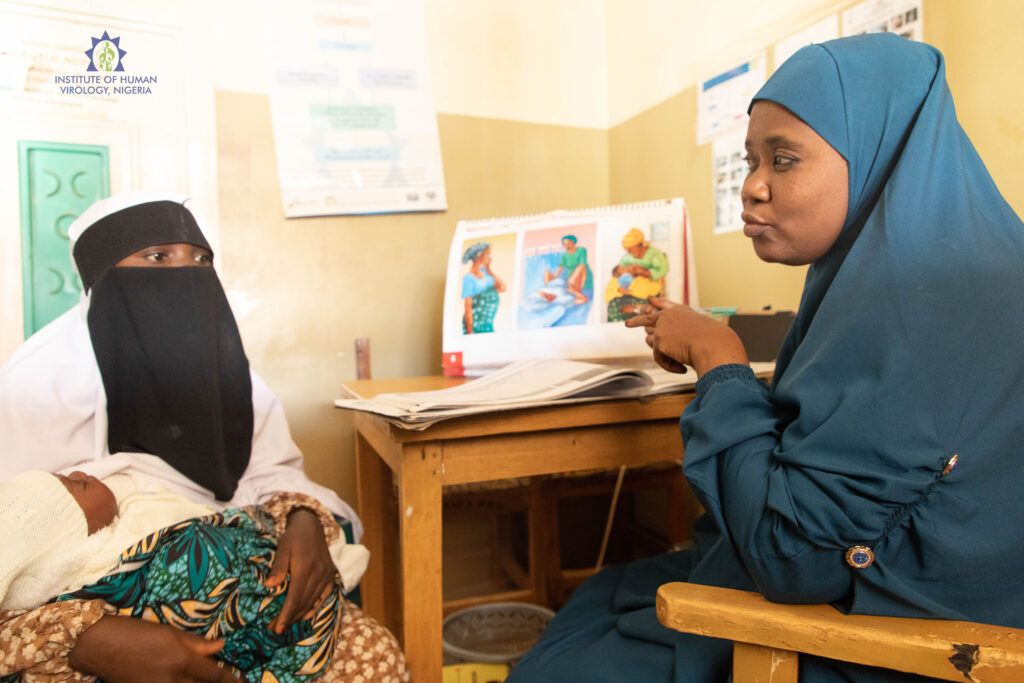
“When one of the roving midwives brought me to General Hospital Katsina after the outreach, the mentor mothers here welcomed me like a friend. They counselled me about adhering to HIV medications and I decided to take my medicines at 8am daily. The mentor mothers and other health care workers told me about the importance of telling my husband about my status and encouraging him to come to the hospital for a test. My husband supports me. The mentor mothers also call me to check on my welfare and guided me to take a viral load test. I’m told that the virus is suppressed because I am adhering to treatment. I have been exclusively breastfeeding my baby. I feel happy every time I come to the hospital because I know that there are people here who care for me,” Khadijah added.
IHVN Senior Program Officer Prevention Care and Treatment, Mrs Salisu Faridah Maiadua said that the program was birthed to reach women in communities who may hardly ever go to the hospital for antenatal care due to security challenges, distance from their houses to the nearest functional public facility, transportation costs, lack of spousal or family consent, cultural peculiarities amongst other reasons.
“We considered working with traditional birth attendants to reach women in communities, but this did not suit our cultural reality. Traditional birth attendants are utilized only for delivery of children and not for antenatal care of women. We therefore decided to collaborate with the State Primary Health Care Development Agency to enlist midwives, nurses and community health extension workers – there are many of them here due to the good number of health colleges in the state. These health workers reside in the different local government areas and are the best hands to create awareness and provide HIV services to their people. We trained the local government MNCH focal persons and the roving midwives to carry out HIV counselling and testing and they work with us closely to provide these services in all the local governments” Faridah said.
She explained that the state government has shown great interest and support for the program which gives room for sustainability of community activities to reach women and children.
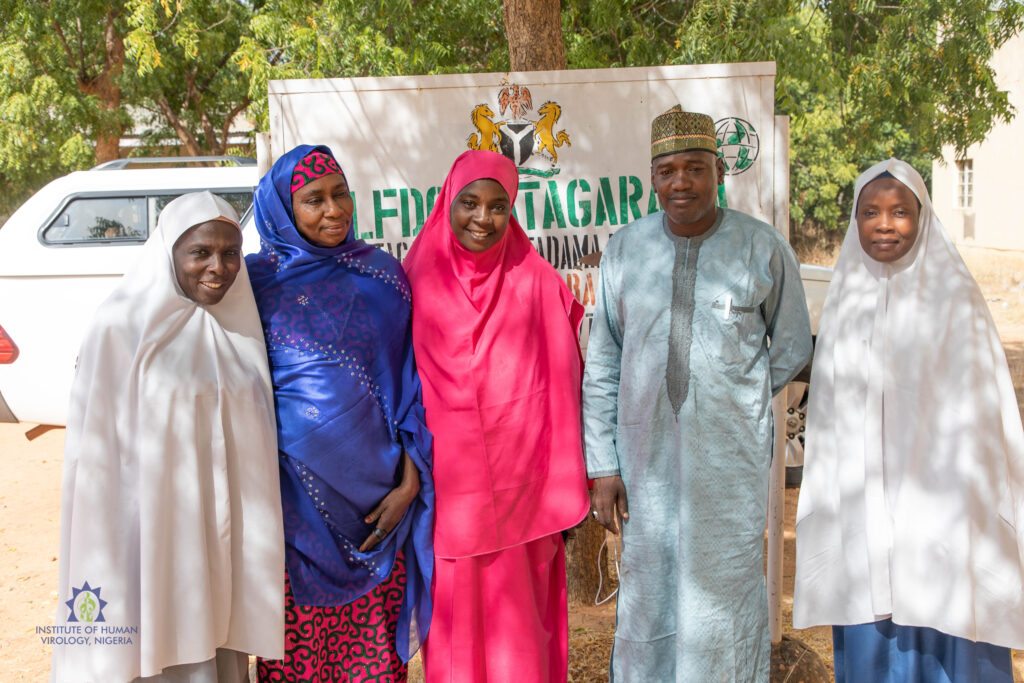
Maternal Neonatal and Child Health Focal Person for Batagarawa Local Government Area, Binta Rabo, goes out with the roving midwives for outreach activities. They conduct advocacy visits to the village heads and agree on a suitable date before going for an outreach. Thereafter, a town crier goes round the community to inform women about the date and the need to participate.
“I love the work, more women in the communities are becoming aware about their health and HIV testing. In fact, some of them who did not go to the hospital before are now going to the hospital. With the outreaches, we have been able identify HIV positive women and even notice other diseases and guide the women appropriately on how to access health services,” Mrs Rabo said.
The State MNCH Focal Person, Mrs. Zainab Sherrif Abdulkadir applauded the strategy and expressed the state’s willingness to partner with IHVN for the well being women in the state. “We always welcome ideas that help the community. The strategy has identified women in the community with HIV that might not have been identified in health facilities. Our women don’t like going to health facilities because of economic, insecurity issues, religion, culture and the hard-to-reach areas where there reside. The roving midwives go to remote areas to tell them the benefit of antenatal care and PMTCT.”
Halima Saidu, a midwife and Jamila Ibrahim, a Community Health Extension worker are part of the “roving midwives” in Bagarawa Local Government Area. They go to every community at least twice to provide antenatal care and HIV prevention services. The midwives have also integrated other health services like checking vital signs, blood pressure, provision of malaria prevention for pregnant women and routine drugs supported by the government and other stakeholders. They also give health talks on personal hygiene, nutrition and the need for antenatal care.
“More than 60 women show up for each outreach. Our community activities are leading to more acceptance of the need to go to the hospital. Taking these services to hard-to-reach areas gives me joy. We see women who dont go to hospital because of lack of awareness about its importance and we educate them. The prayers and happiness of these women is all the motivation I need,” Halima Saidu said.
In Katsina Local Government Area, Roving Midwives, Hussaina Abdullahi and Halima Abubakar say that the program has addressed the need of many women who have poor health seeking behaviour. “They only go to the hospital when their health situation is dire. Reaching them in the community has been more effective. We counsel them and create awareness about the need to go to the hospital and we notice that they are more receptive to us when we are among them than in the hospital,” said Halima Abubakar.
26-year-old Aisha Shehu received counselling at one of the outreaches in Katsina Local Government Area. She is four months pregnant for her first baby and was unwilling to go to the hospital because she could not afford transportation costs. However, when she discovered her positive status during the outreach, she was taken to General Hospital Katsina for follow up tests and life saving medications.
“I cried and wanted to die because I thought that death was better than living with HIV. I have been hearing about HIV, but I didn’t know that I am HIV positive. In the hospital, the adherence counsellor and mentor mother calmed me down with their kind words. Today, I am assured of my health and that of my baby because of the services I received here,” Aisha said.
IHVN Program Lead Maternal, and Child Health, Dr. Victoria Igbinomwanhia explained that the strategy is one of the community initiatives adopted by the Institute with funding support from the US Presidents Emergency Plan for AIDS Relief (PEPFAR) through Centers for Disease Control (US-CDC).
“In the four supported States where HIV services are provided, we have utilized strategies such as the Mothers’ Love Party (MLP), the Congregational Approach to PMTCT (CAP) such as baby shower/ Faith based CAP where we work with community leaders and faith-based leaders to sensitize pregnant and breast feeding women in communities about HIV, provide HIV counselling, testing and other health services,” she said.