• Working Hours - Mon - Thu: 8:00 - 17:00; Fri: 8:00 - 14:00
What are you looking for?

Author Archives: admin

“I’m Happy my Child is Cured of Tuberculosis” – Mother of Three-Year-Old TB Survivor

The African proverb, “It takes a village to raise a child” is a reminder that it takes collective efforts to ensure that no child is left behind in the fight against tuberculosis in Nigeria.

With funding support from the Global Fund to Fight AIDS, Tuberculosis and Malaria (GF), Institute of Human Virology Nigeria (IHVN) is working with the National Tuberculosis and Leprosy Control Programme (NTBLCP) and partners across the 36 states and Federal Capital Territory to find and treat tuberculosis in children and adults.

Three-year old Faithful Dam is one of the children identified with tuberculosis by the Global Fund GC7, Nigeria TB-HIV Reach Integration and Impact Project (N-THRIP program). More than 60,0000 children have been identified from January 2024 till date under the project.  Faithful is now TB free after completing six months of treatment. His story is one of collective efforts and resilience to fight tuberculosis.

Faithful’s experience with tuberculosis started in April 2025 when his mother, Gloria Dam, noticed swollen lymph nodes all over his neck. She wondered what to do about the hard swellings and went to a nearby patent medicine store where she obtained antibiotics.

The antibiotics she got were only the beginning of several medications which drained her family’s income. When his health did not improve, she got more worried and asked family, friends and neighbours what to do.

“Some told me to rub palm oil on him, others said it was spiritual and I should take him to the village for prayers. Some said I should press the swollen area with hot water. Faithful did not get better after she tried herbs and local therapies. I was frustrated, tired and had several sleepless nights. I did not even think that it could be tuberculosis because nobody around me has had tuberculosis. I used to think that tuberculosis only infects people who smoke,” Gloria said.

She shunned pressure to go to spiritualists and rather went to a nearby Primary Health Center. Gloria discovered that the health care workers at the center were on strike, so she went to Garki Hospital in Abuja.

The TB Directly Observed Therapy (DOT) Officer at the hospital, Salome Chijioke recalled that when Gloria stepped into the TB DOT Clinic in August 2025, she was crying and her baby was weak with a high fever.

“When they came, we reassured them that they have come to the right place. A Gene Xpert test and Chest Xray were conducted for Faithful which showed that he had tuberculosis,” Salome said.

Gloria was sad when she heard the diagnosis but relieved to know that TB is curable. She was also happy that when Faithful commenced treatment, he showed signs of improvement.

The path to health was not one that she walked alone. Her husband provided moral support and care for her and Faithful while Faithful’s siblings also cooperated when he needed to be out of school for two months. The DOT officer provided counselling and support to ensure that her son adhered to the medications for six months even when initial side reactions tempted her to stop treatment.

Medications were given to her for free with funding support from the Global Fund, TB program coordination by NTBLCP and implementation by IHVN and the Association for Reproductive and Family Health (ARFH).

Faithful’s progress was also monitored closely at the DOT center. Salome, the TB DOT Officer, called Gloria often to check Faithful’s health, they received medications and one-on-one counselling support monthly during visits. Follow-up tests were conducted at month two, month five and after completion of the medication, at month six at the hospital.

Faithful also contributed to the success of his treatment by willingly taking his medication.

“Every day, he would remind me about his medication. Initially, I was concerned that he might reject the medications, but he was cooperative,” Gloria added.

The family was also tested for tuberculosis and placed on TB preventive treatment.

Faithful is now healthy and strong enough to play, participate in his usual school activities and even write his end-of-term exams.

“I am grateful for all the support given. I know we would not have been able to afford the medications if it was not provided for free. I advise mothers to immediately go to the hospital if they notice the same kind of symptoms that Faithful had. I regret that I delayed in seeking opinions from friends and neighbours before seeking medical help. I wasted time and money.” Gloria said.

Salome added that it is important to continue to create awareness about tuberculosis to stop its spread and leave no one behind. Symptoms to look out for include cough for more than two weeks, fever, night sweets and weight loss.

According to her, “some people think that tuberculosis can be transmitted from mother to child, but TB is an airborne disease.”

IHVN Program Manager, Dr. Adekola Adekunle explained that innovative strategies such as the National Childhood TB Testing Week, Childhood TB diagnosis using stool sample for Xpert MTB/RIF test, support for X-ray services among children, active contact investigation of households of bacteriologically diagnosed index TB patients, integration with other disease programs, are being implemented to find and treat tuberculosis in children and these has offered promising strongpoints for ending tuberculosis in our lifetime.

Indeed, it takes the collective responsibility of all to leave no child behind in addressing tuberculosis.

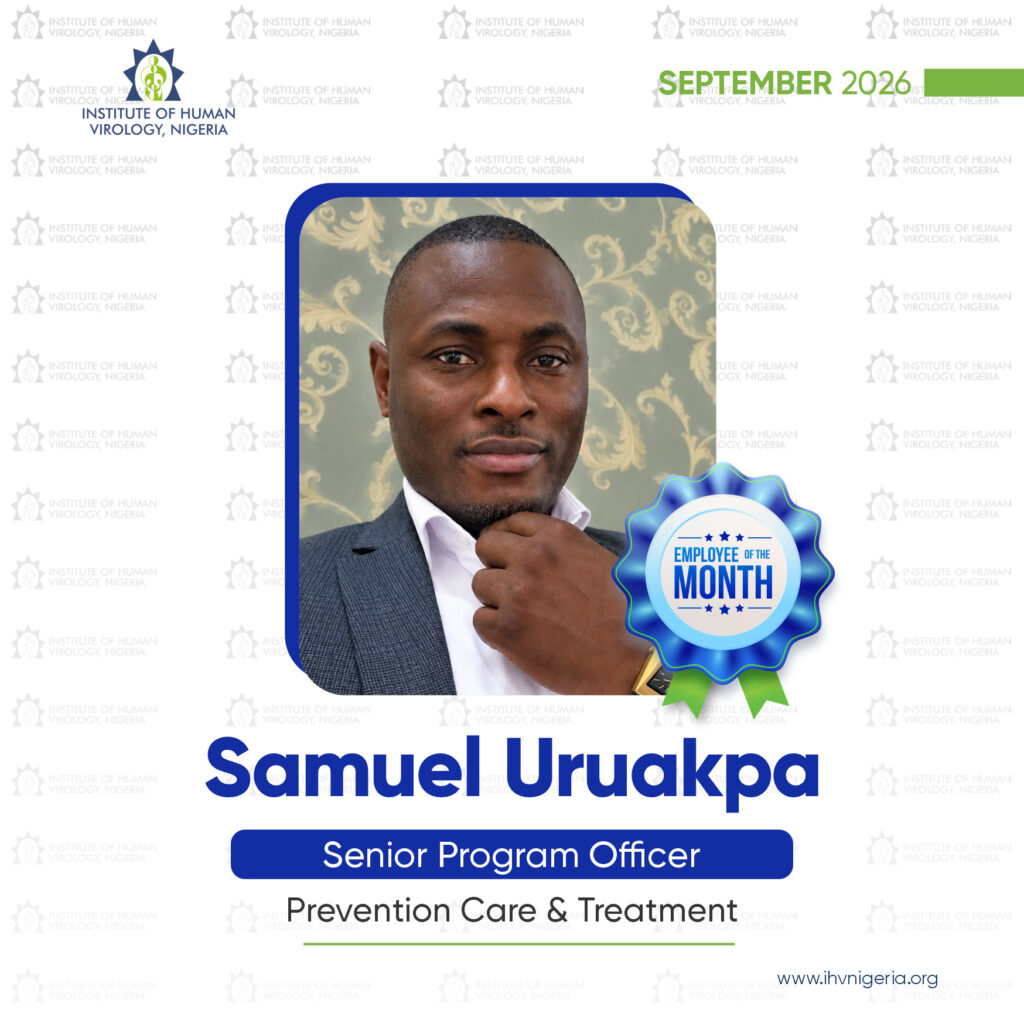
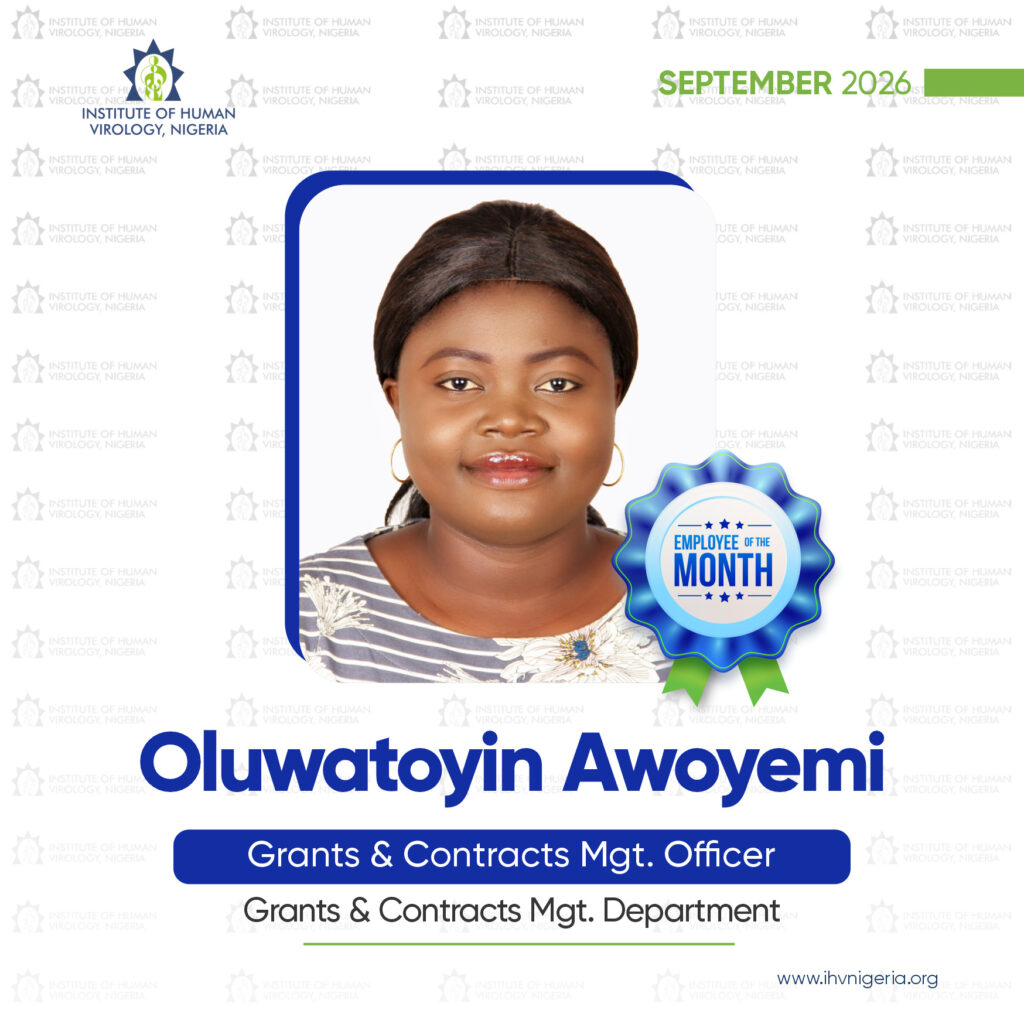
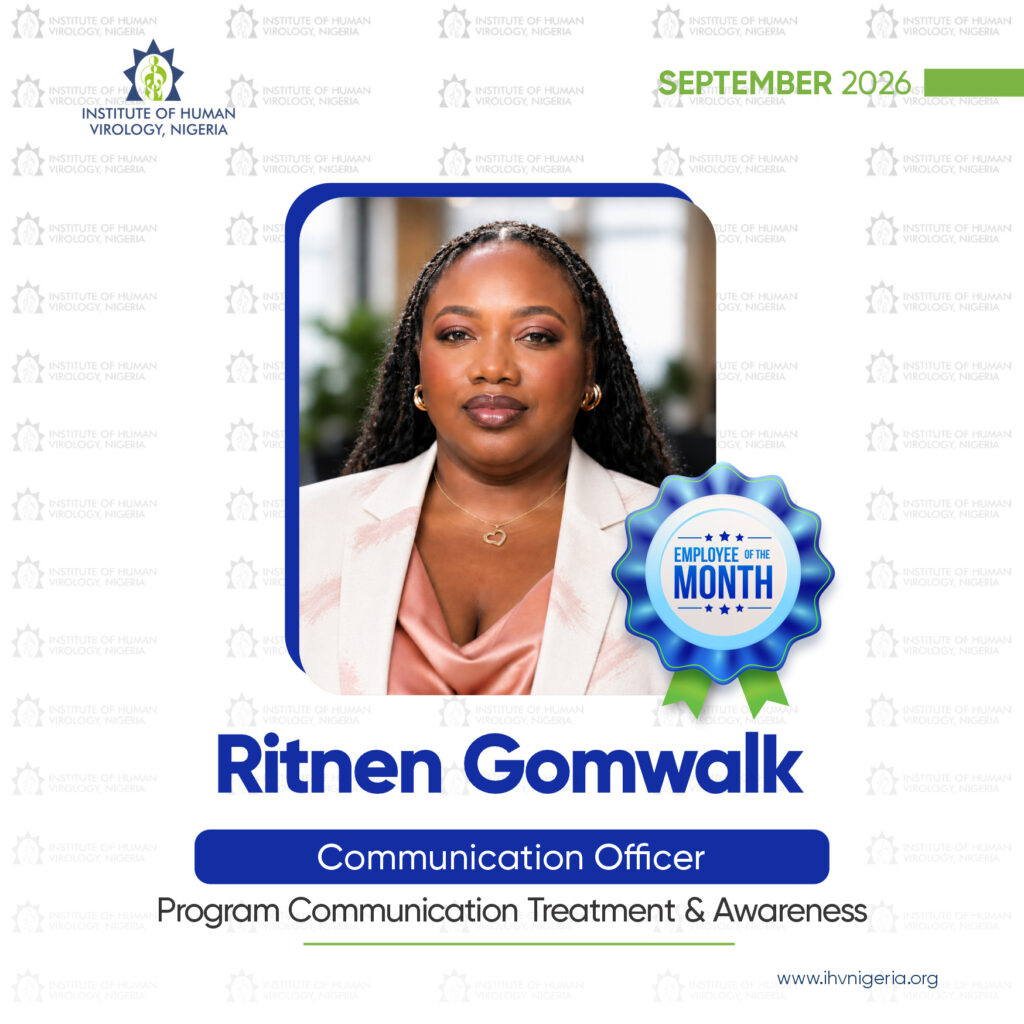
IHVN Celebrates March 2026 Employees of the Month

In fostering an excellent work culture and staff performance, the Executive Management of the Institute of Human Virology Nigeria (IHVN) has initiated the “Employee Recognition Awards” to recognize “Employees of the Month” and “Employee of the Year.”

According to Dr. Olu Alabi, the IHVN Director of Finance and Administration, this recognition encompasses overall employee performance in areas such as dress code, innovation, teamwork, productivity, efficiency, leadership, interpersonal skills, punctuality, and adherence to company values and principles, among other factors.

For March 2026, IHVN celebrates Benjamin Pillatar, Douglou Samuel, Ayomide Olumefun, Chizurumoke Kalu, Pius Daniel Dung, Jafaru Imuekehme and Haruna Gur Bukar, whose performance stood out in their teams.

Hearty cheers to our March star performers!

IHVN Supports Nigeria’s Launch of Lenacapavir

As Nigeria officially launches the Long-Lasting Injectable Pre-Exposure Prophylaxis, Lenacapavir (LEN PrEP) for HIV prevention, the Chief Executive Officer of Institute of Human Virology Nigeria (IHVN), Dr. Patrick Dakum has expressed the Institute’s commitment to supporting the government to make the injectable accessible to key populations, vulnerable groups and individuals at high risk of HIV infection.

Dr. Dakum stated this during a ceremony to unveil LEN PrEP in Abuja.

“As the Principal Recipient of the Global Fund in Nigeria, we are committed to translating government policies into actionable points at the community. Our goal is to ensure that there is speed and efficiency implementing programs and we are grateful to work with the government to make this happen. We thank the Global Fund to Fight HIV, Malaria and Tuberculosis. They are a reliable partner in fighting HIV and TB. We will continue to work with local and international partners to succeed.”

At the flag-off ceremony, the Honourable Coordinating Minister for Health and Social Welfare, Prof. Muhammad Ali Pate said that with the changing global financing landscape for public health programs, innovation and domestic resource mobilization are essential. He stressed the importance of a sector-wide, integrated approach that ensures that government and partners work together for the sustainability of TB, HIV and malaria programmes.

“While we have had tremendous success in dealing with HIV, TB and malaria over the past five years with support of international partners, the changing global landscape forces us to think differently. Innovative tools like Lenacapavir gives us another instrument to help us finish the work that we know we can do,” he said.

Nigeria was selected by the Global Fund as one of the nine early adopter countries for the introduction of Lenacapavir with 52,000 dozes to be deployed to Anambra, Ebonyi, Gombe, Kwara, Akwa Ibom, Cross River and Benue States under a pilot scheme.

At the ceremony, Global Fund Representative, Jean-Thomas Nouboussi said the launch is a demonstration of the effectiveness of partnerships with government, civil society, private sector, communities to fight HIV, tuberculosis and malaria.

“Lenacapavir represents a game changer. It is a major advance to the prevention of HIV. It addresses one of the key challenges in the prevention of HIV which was the difficulty of adherence to daily HIV pills. It offers hope for reaching a population that we have not been able to reach because of challenges.”

Mr. Nouboussi stated that, “For the first time, since the beginning of HIV pandemic, a new tool will be rolled out at the same time in developing countries and in the Western countries. We need to recognize this. The Global Fund’s ambition is to reach 2 million people with Lenacapavir by the end of 2028, working with partners. Nigeria will receive by 2028, 179,700 dozes. We expect that the government will step in and accelerate the deployment in the whole country.”

Earlier, IHVN participated in a media parley organized by the National AIDS and STIs Control Programme (NASCP) ahead of the official launch of LEN PrEP, IHVN Director of Special Projects, Dr. Aderonke Agbaje said that the injectable has the potential to improve uptake and adherence of HIV prevention options particularly among key and vulnerable populations who may struggle with daily medications.

“LEN PrEP is not a replacement for existing options but an additional choice within a combination prevention approach. By expanding choice and tailoring prevention to individual needs, Nigeria is better positioned to reduce new infections and move closer to ending HIV as a public health threat,” she said.

She explained that IHVN is supporting the roll-out through a comprehensive system-integrated approach aligned with national leadership under the Federal Ministry of Health and NASCP. This support includes service delivery for access and sustainability, capacity building of health workers, community engagement and demand creation, commodity management through national systems and strengthening data systems and real-time feedback mechanisms.

EQUAL Project Unveils Research Findings on Community Midwifery in Conflict-Affected Areas in Nigeria

Researchers at the Institute of Human Virology Nigeria (IHVN) have said that Nigeria’s community midwifery program is effective in addressing maternal, neonatal health challenges in conflict-affected areas in North-East, Nigeria.

They revealed this while unveiling research findings of the Ensuring Quality Access and Learning for Mothers and Newborns in Conflict-Affected Contexts (EQUAL) project at the IHVN Campus in Abuja.

At the close-out meeting, EQUAL Nigeria Principal Investigator, Prof. Emilia Iwu said that the research was conducted in Yobe State from 2021 to 2026.

“28.5% of global maternal deaths occur in Nigeria. What we see is that there is a lifetime risk of maternal death among one in 19 pregnant women in the country. This is unlike developed countries where the risk is one in 4,900 women.

Nigeria has made significant investments in midwifery training and their deployment to underserved and hard-to-reach areas. This initiative was piloted first in Yobe State which is also affected by conflict.

The data shows the community midwives are there working, and communities are being served. Community midwifery graduates are nearly twice as likely to originate from rural areas than basic midwifery graduates, 67% of them are employed by six months with 79% of them providing skilled maternal and new-born care at primary health center level. The evidence is that 98.4% of the community midwives are performing deliveries, 90.2% are providing antenatal care and 69.9% are offering family planning services.”

Prof. Iwu explained that though the community midwifery program is working to address maternal, neonatal health gaps in conflict-affected areas, sustainability threats must be attended to.

“The financing architecture for funding the community midwives’ salaries is fragile and program survival depends on political will. There is also the challenge of attrition to more lucrative positions after approximately five years. These midwives are exposed to insecurity and poor working conditions in remote areas. Nigeria needs to hold up its side of the bargain in supporting sustainability for this initiative,” she emphasized.

At the event, the Acting Registrar of the Nursing and Midwifery Council of Nigeria (NMCN), Mr. Alhassan Ndagi praised the researchers for their painstaking research which was done in collaboration with the council. Mr. Ndagi who was represented by the Council’s Head of Education Department, Dr. Emmanuel Udontre, assured stakeholders present that steps are already being taken to ensure sustainability of the community midwifery program in the country.

Provost of Shehu Sule College of Nursing Sciences in Damaturu, Hadiza Sabo said the project revealed key findings to guide decisions concerning maternal, neonatal and child health in the state.

Also at the dissemination, EQUAL Nigeria Project Co-Principal Investigator, Dr. Charity Maina, called the attention of policy makers to other key project findings which are, “the Boko Haram insurgency in Yobe State has disrupted maternal, neonatal health (MNH) services and increased the risk faced by pregnant women and health care workers. In addition, gender, cultural and religious beliefs in the state impact care seeking, MNH prioritization and diversity of the health force.”

Dr. Maina called on the government to build accountability measures to make sure MNH funding is protected and not diverted to other competing priorities.

EQUAL is a multi-country research consortium generating evidence on effective approaches to deliver lifesaving MNH care in countries affected by conflict. It is being implemented in DRC, Nigeria, Somalia, and South Sudan – countries with the highest burden of maternal and neonatal deaths worldwide. The project is implemented with funding from the UK Aid from the UK government and implemented by the International Rescue Committee, Institute of Human Virology Nigeria, John Hopkins Center for Humanitarian Health, Somali Research and Development Institute and the Catholic University of Bukavu.