
The journey to health for people who are diagnosed with drug-resistant tuberculosis (DR-TB) requires treatment and care at health facility and community levels. Through funding from the Global Fund to Fight HIV, TB and Malaria, the Institute of Human Virology Nigeria (IHVN), its sub-recipient organizations across the 36 states and Federal Capital Territory (FCT) and community-based organizations have formed a network of care to support individuals diagnosed with DR-TB.
With leadership and oversight from the National Tuberculosis Leprosy and Buruli Ulcer Control Program (NTBLCP), the IHVN Nigeria TB and HIV Reach and Impact Project (N-THRIP) has identified more than 3,000 people with drug-resistant tuberculosis between January 2024 and December 2025.
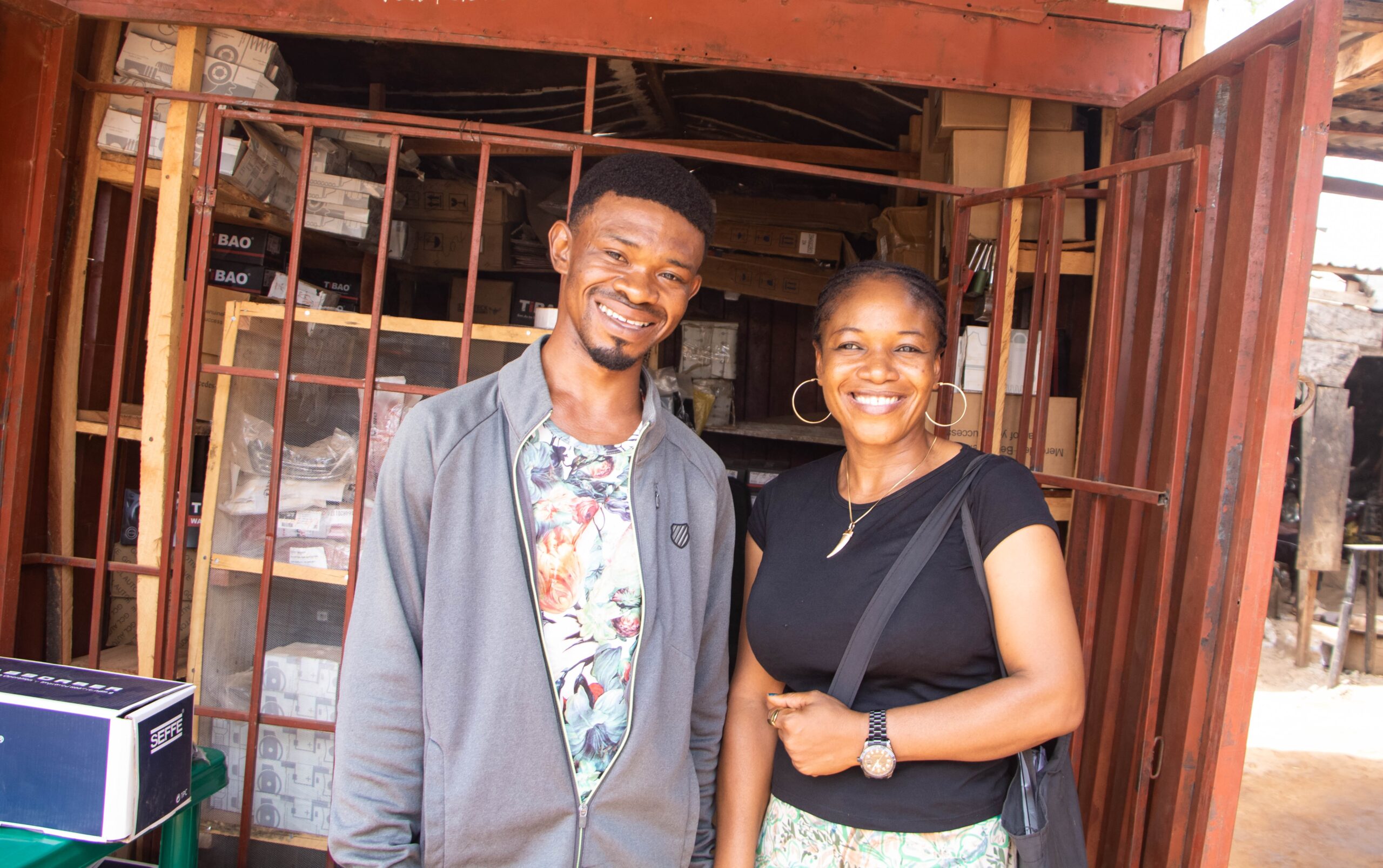
32-year-old Simon Chukwuma, a car spare parts dealer in Abuja is a DR-TB survivor who has benefitted from the care and treatment services provided by the N-THRIP project.
“I used to think that tuberculosis is a disease for rich people because only rich people can afford the treatment. That was until I was diagnosed with DR-TB in August 2025,” Chukwuma said.
Chukwuma experienced symptoms such as coughing out blood, chest pain, dizziness, weakness and drenching night sweats. He received several diagnoses like malaria, typhoid, ulcer etc from chemists and private providers before being diagnosed in Wuse General Hospital, Abuja for drug-resistant tuberculosis.
He managed the symptoms quietly for more than a year because he was afraid of losing his apprenticeship position as a car spare parts dealer with his employer.
“I come from a poor family and I am the first born. I’ve had a great opportunity to learn dealership in car spare parts for six years. I started having these symptoms when I was about concluding my apprenticeship. I didn’t want to lose out on being paid off to start my own business,” Chukwuma said.
His lonely path to seeking health care did not yield results. He lost weight until he became emaciated. He even took herbs to no avail and wondered whether it was a witchcraft attack. Chukwuma’s employer stepped in to support when his condition became visibly worse. Eventually, it was a concerned person in the church where he serves as a chorister who referred him to a public hospital for tuberculosis screening and tests.
“I gave my sputum for a test at the hospital and was informed when the result was positive. I felt weak in my spirit when I heard the diagnosis, but I had to be strong. My father is dead and I could not tell my mother in the village about the sickness because I was afraid that she might faint.”
Chukwuma found support when he needed it the most from dedicated health care providers and community workers. He received free medications from the hospital and the Directly Observed Treatment (DOT) Officer there encouraged him to adhere to his medication despite the side effects. He gradually got better as he worked with this counsel.
According to him, staff of Dawn of Life Foundation (DOAF), a community-based organization supported by the N-THRIP project became like a family to him even when he had to temporarily move to Enugu State from the Federal Capital Territory to stay with his younger brother to recuperate fully.
“They told me that I will get through it. They called to check if I’m taking medications daily as stipulated. They ensured that I got a monthly stipend and that my brother, who was my treatment supporter also got a stipend. They also counselled me on how to prevent transmission to others and stay healthy. I always used a nose mask and tried to eat well, even though initially, my appetite was poor,” he explained.
Chukwuma now feels more alive than he has ever been. He completed a six-month treatment for drug-resistant tuberculosis in February 2026 with support from family, his employer, his friends and his newfound family of health workers at the facility and community level who made is treatment journey successful.
“Before, I could not even walk a few meters because I used to feel dizzy and weak, now I can move around with agility. When my employer paid me off and I graduated from the apprenticeship, I even travelled from Abuja to Lagos to get car spare parts to start my own business,” he said beaming with smiles.
“I love to sing in church, and I can play the guitar. When I was sick, I was unable to do that, now I do that with ease. I felt hopeless before, like the sickness was a death sentence, now I am strong and healthy. I’ve completed treatment and I am DR-TB free.”
DOAF Staff, Gladys Shir supported Chukwuma through his treatment journey. She is also excited about his health and sometimes calls him to share his story in the hospital with others just diagnosed with DR-TB. She said that since the N-THRIP project started in January 2024, her community-based organization has supported more than 50 DR-TB patients in the FCT.
DOAF works with Association for Reproductive and Family Health (ARFH), which is a sub-recipient to IHVN on the GF supported N-THRIP project in the FCT.
“Free diagnosis and treatment for DR-TB is provided in Nyanya General Hospital, Wuse General Hospital, Kubwa General Hospital, University of Abuja Teaching Hospital (UATH) and Kwali General Hospital,” Gladys said.
Through the N-THRIP project, IHVN works in collaboration with National TB Program, State TB programs, sub-recipients and CBOs to strengthen DR-TB treatment and care across the country, including support for treatment centres, sample transportation, laboratory – diagnostic and follow-up tests, linkage to treatment, treatment monitoring, follow-up, and social and transportation support for DR-TB patients.
Over the years, IHVN has built capacity in DR-TB care training LGA DR-TB teams as well as health workers in the DR-TB centres across the country.
Given observed clinical and programmatic gaps in TB care cascade and precisely in DR-TB management, IHVN will funding support from the Global Funds to fight AIDS Tuberculosis and Malaria and in conjunction with the NTBLCP has designed plans in improving care of care among DS/DRTB clients using accountability matrices and digital health adherence mechanisms to improve quality of care and enhance treatment outcomes.